XIV. Macedonia in the time of Ali Pasha (end of 18th century to the beginning of 19th)
1. The Greek communities of Northern or Upper Macedonia
1. During this period Upper Macedonia, which lies today within the confines of Yugoslavia and Bulgaria, had become, according to Beaujour [4], almost wholly depopulated except for a number of towns and villages inhabited by mixed populations of Turks, Slavs, Albanians, Greeks and Greco-Vlachs.
The Turkish documents published by the Historical Institute of Skopje [5] provide a variety of miscellaneous items which, when corre-
4. Beaujour, Tableau, vol. 1, p. 128.
5. Turkish Documents, 1, pp. 5 ff.
473

lated with information from other sources, help us form a picture of life in these parts from 1800 onwards. One dominant element running through these documents is the state of unrest created by bodies of Albanian soldiery who threatened to overrun those parts now included in Yugoslav Macedonia, and there is reference to protective measures taken by the Porte. We read, too, of the unjust imposition of taxes, the weight of which fell mainly on the poor, and of the collection of a whole
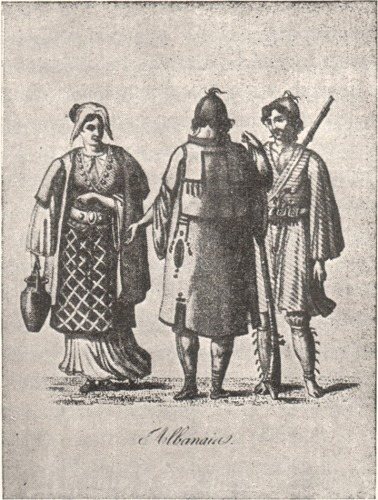
Fig. 149. Albanians.
(A. L. Castellan, Moeurs, usages, costumes des Othomans, Paris 1812, vol. 4, opposite p. 106)
variety of dues. There is also mention of the way in which agricultural produce was disposed of, and of the continuous accession of the rayas to Islam. There are also some interesting details about the economic activity of the inhabitants of Yugoslav Macedonia — Turks, Albanians, Serbs, Bulgars, Greeks, and Jews (see Albanian, Jewish and Armenian types in figs. 149, 150) [1].
Although the region continued to forge ahead economically, its population suffered considerably as a result of the disturbed situation
1. Turkish Documents, 1 (1800-1803) 11 ff.
474
obtaining in Albania at this time, which gave rise to frequent inroads by brigand bands throughout the adjacent districts.
In 1787 the rebellious paşa of Skutari, Mahmud son of Mehmed, threw the whole of Albania and the neighbouring regions into turmoil [1]. He threatened to invade Monastir and its environs (the city had 10-12 thousand inhabitants, mostly Turks). The mütesellim of Thessalonica was seriously alarmed and sought the help of the paşa of Thessalonica.
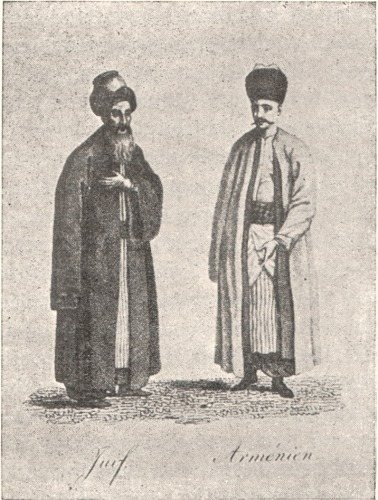
Fig. 150. Jew and Armenian.
(Castellan, ibid., vol. 4, opposlte p. 97)
The inhabitants of that city were themselves thrown into a state of panic when the rumour ran round that the paşa of Skutari, having taken Monastir, was intending to march now on Thessalonica. Their terror was increased by the reflection that there were already 3.000 Albanians settled within the city. These were certain to take advantage of their compatriot's approach and go over to his side [2]. Α number of clashes appear to have occurred outside Monastir, for we learn that
1. See many details in Kolias, Σελίδες, «Ἀθηνᾶ» 49 (1939) 248-255.
2. Mertzios, Μνημεῖα, p. 436. On the population of Monastir see Felix de Beaujour, Voyage militaire dans l’empire othoman, Paris 1829, vol. 1, p. 204.
475
on 18 June ninety Albanian prisoners belonging to troops of Mahmud Pasha were sent under guard to Thessalonica [1].
We are, at this point, on the eve of the Russo-Turkish War (1787-1792). The lawless behaviour of criminal elements at the expense of Christians and Jews was giving rise to frequent disturbances at Thessalonica [2]. With the outbreak of the war the situation worsened with the imposition of fresh taxes and further burdens for the rayas [3].
In April 1790 there appeared in the Thermaïc Gulf the notorious Greek pirate Lampros Katsonis, a former officer in the Russian army, who was now making landings to plunder the coastal settlements [4].
In 1791 and 1792 northern Albania and north-west Macedonia were thrown once more into a state of anarchy by the mutual conflicts between the Albanian beys and by the rebellious activities of Mahmud Pasha. The population suffered greatly from the presence alternately of Albanian and of Turkish troops in their villages. Their high-handed behaviour went as far as setting fire to houses, as witness the records of the church of St. George of Strunga [5]. One result of this disorder was a further increase in the cost of living throughout the region [6].
In December 1793 a report ran in Thessalonica that Mahmud Pasha had defeated the Sultan's troops and beheaded the kâhya of the beylerbey of Rumeli. The wretched Macedonians had further cause for alarm when it was mmoured that the victorious Albanian chief was planning to march on Thessalonica. Commerce between the latter and Monastir, Albania, Bosnia and Vidin came to a standstill [7].
These anarchic conditions were further aggravated by persecution and corruption on the part of the very authorities to whom the keeping of order had been entrusted. In 1800, for instance, Hatir Zade Seïd Selim, the kaymakam of Monastir, was denounced and severely criticized for failing to guard the passes into Albania, which had resulted in lawless bands bursting eastwards from Albania and plundering the district of Prilep. The kaymakam had been diverting public funds to his own advantage. Co-operating with the worst elements, he was liv-
1. Mertzios, Μνημεῖα, p. 438.
2. Ibid., p. 435. See also pp. 437, 438, 439.
3. Ibid., p. 437. See also p. 440.
4. Ibid., p. 450. See also the appearance of pirates in 1796 on pp. 464-465.
5. See detailed 'memoire' of 1792 in Snegarov, The Codex of the Church of St. George at Strunga, pp. 35-36.
6. Ibid., p. 37.
7. Mertzios, ibid., p. 458.
476
ing at the expense of the general population and was on the way to ruining his own city [1].
The attacks of Albanian brigands continued without cease. In the summer of 1803 a hundred and fifty men belonging to Banus of Kolónia and to Nurekes of Premetí fell upon the village of Gradésnitsa in the kaza of Prilep. They plundered and burnt the houses, slew two seğmens (gendarmes), wounded two peasants and took nineteen others prisoner [2].
Add to all this the expenses of maintaining the regular troops, the imposition of numerous extra taxes, the abuses of the tax-gatherers [3], and one forms a gloomy picture of life at this time. In order to meet the huge expenses incurred in conducting war on several fronts at the same time, the Porte was obliged to increase the poll-tax (cizye). Tax-payers belonging to the first class had to pay 40 kuruş extra, to the second class 30 kuruş and to the third class 10 [4].
Other exactions took the form of enforced loans, which when repeated again and again reduced the merchants and craftsmen to difficult straits [5]. This in turn could not but bring about an increase in the price of prime necessities [6].
From 1800 onwards, as a result of the Napoleonic Wars, the situation in Macedonia — as indeed throughout European Turkey generally — worsened steadily. The unrest amongst all the Balkan populations under Turkish rule, the growing independence of Pasvantoglu, Paşa of Vidin, the appearance in every quarter of klephts and hayduks both Moslem and Christian, were no doubt the reasons which prompted Selim III to issue a decree on 10 July 1801, renewing for a further two years the virtually dictatorial powers granted to the Vali of Rumeli, Hadji Mehmed Pasha [7]. Notorious Moslem hayduks like Kara Feïz, Ahmedjik, Isa-
1. Turkish Documents, 1 (1800-1803) 119-121. See also almost identical charges brought by Ali Pasha against the former kaymakam of Monastir, Çeribaşi Zade Osman Bey, ibid., 2 (1803-1808) 86-87.
2. Turkish Documents, 2 (1803-1808) 25-26. See measures taken by the Porte on pp. 28-29.
3. Ibid., pp. 26 ff. The tax on each small animal was 1 para, while large animals bore a tax of 1 piastre each. Wine carried 2 paras an oka, and ouzo 4 paras. As regards other produce, it was taxed on agreement with the tax-collector (Beaujour, Tábleau, 1, p. 47).
4. Turkish Documents, 2 (1803-1808) 35. See also pp. 36-37.
5. Ibid., pp. 39-40. See also pp. 65-66.
6. Ibid., p. 57. For the high price of cereals in 1806 at Strounga see Snegarov, The codex, pp. 5-6.
7. Turkish Documents, 1 (1800-1803) 66-68.
477
oglu, Hadji Mousa-oglu, Kafli Selim and Ali Mula were spreading disorder throughout numerous districts [1], with the result that the peasants found themselves contributing money and produce towards the payments and maintenance of the troops assigned to the task of quelling the anarchy [2].
Faced with this emergency, the Sultan was driven to bestowing, on 28 January 1803, the office of Rumeli valisi upon Ali Pasha of Yánnina, a man already well-known for his savage temperament. Thereupon Ali made preparations for a tour of inspection of all the kazas from Monastir to Kyustendil, and issued advance orders for the provision of food and money for his troops [3]. Naturally, the expenses fell entirely upon the local inhabitants, particularly on the trade-guilds. The kaza of Monastir had to contribute 26.033 kuruş, Kicevo 7.302,5; Flórina 1.359; Vodená (Édessa) 28.850; Doïráni 1.890; and Tikves also 1.890 [4]. However, on 17 February 1804 Ibrahim Pasha appears to have succeeded Ali as Rumeli valisi [5].
2. The economic and cultural progress observable among the Greco-Vlach settlements at this period makes an interesting study. We find them expanding rapidly into large villages and, ultimately, into quite sizeable towns of considerable commercial importance. In these areas (located today in Southern Yugöslavia) were to be found a respectable number of Greco-Vlachs intermingled with Turks, Albanians and Slavs. The Vlachs were chiefly stock-farmers and merchants, but did not emigrate at the same rate as did the Greeks of Southern Macedonia.
One settlement in particular which was fast developing into a city of some size and importance was Monastir. In the time of Hadji Kalfa, (i.e. around the middle of the 17th century) it had been inhabited by Bulgarians [6]. During the following century — and especially after the pillaging and destruction of their city in 1769 — many of the inhabitants of Moschopolis had chosen Monastir, amongst other destinations, as a refuge [7]. The city was a military centre of considerable importance,
1. Turkish Documents, 1 (1800-1803), 121 ff.
2. Ibid., 1, pp. 126 ff.
3. Ibid., 2 (1803-1808) 5-6. See also pp. 9 ff.
4. Ibid., 2, pp. 12-13. 5. Ibid., 2, pp. 37.
6. Hadschi Chalfa, Rumeli und Bosna, p. 97.
7. See Vacalopoulos, Δυτικομακεδόνες ἀπόδημοι, pp. 25-26, where relevant bibliography is to be found.
478
and could thus offer a fair measure of security. It provided a safe base from which Albanian bands could be repelled whenever they descended to plunder the neighbouring areas (and for this reason the Turkish records relating to the district are fairly numerous). The refugees from Moschopolis had proved themselves some of the most energetic members of the Greek community at Monastir [1].
With the outbreak of the Greek insurrection of 1770, units of Albanian troops and bands of brigands did not miss the opportunity of indulging their appetites for plunder, and their activities continued without cease in the years that followed. This state of affairs forced people to take refuge in the larger and more protected centres, and Monastir in particular. In a Turkish list of Christian grocers at Monastir, dated 12 July 1801 (and only recently published), of the 25 tradesmen mentioned a large proportion have Greek or Vlach surnames [2].
The influx of people to Monastir from the surrounding areas was to continue throughout the last decades of the 18th century and into the beginning of the 19th. Α large percentage of these refugees came from Flórina. One of that city's ayans (Turkish notables), by the name of Mustafa, viewed the trend with alarm. In view of the steady depopulation of the Flórina district (and the damage, no doubt, which this brought upon the local magnates through the resulting shortage of labourers), Mustafa had begun to take severe measures against those who had left home — even in cases where they had moved away 15 to 20 years earlier. Thus, on 23 March 1803, the divan of Rumeli instructed him that he must stop troubling those who had been absent from their native places for more than 10 years; otherwise he would be liable to removal from office and severe penalties [3]. However, the migration of distressed peasantry was to continue apace and no kind of coercive measures served to check it.
This ceaseless influx of Vlach-speaking Greeks brought about a change in the composition of Monastir's population. Though, as we have observed, it had been settled originally mostly by Bulgarians, the city was now fast becoming a commercial centre of considerable size and importance (see fig. 151), where the Greek element and the Greek language were steadily gaining ground. By the beginning of the 19th century Monastir had become the normal headquarters of the Rumeli
1. George Kizas, Μεγάροβον, «Μακεδονικὸν Ἡμερολόγιον» 3 (1910) 241.
2. Turkish Documents, 1 (1800-1803) 99.
3. Ibid., p. 118. See also pp. 118-119.
479
valisi [1]; and in 1820 his headquarters were transferred thither from Sofia for good [2]. The city also became the seat of the Orthodox Metropolitan of Pelagonía, whose ancient name was preserved in the ecclesiastical title according to a tradition many centuries old [3].
The Greek doctors and merchants of Monastir were well-known. In 1817, for example, we learn that the surgeon Angelis enjoyed the full
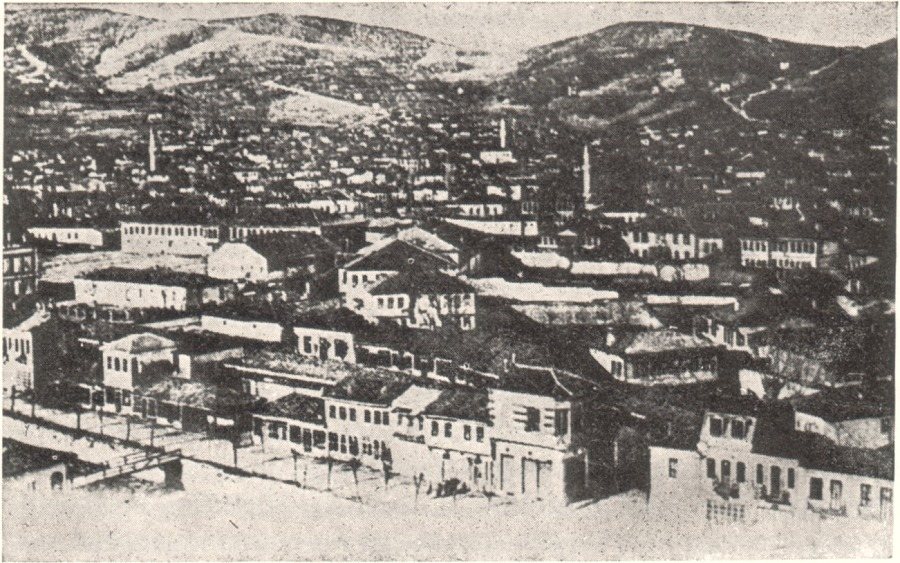
Fig. 151. Monastir. General view.
confidence even of the Turks [4]. Then there is mention in 1835 of a leading merchant named Hadji Giorgis Diskotzas, who was "engaged in trade with Europe, Persia and India". This man had obtained from the Sultan a ferman making him a beratlı (protected person), and had succeeded in obtaining a similar berat for one of his two house-servants, Hadji Dimitri [5].
By the beginning of the 20th century the influence of the Greeks in the commercial and educational spheres had become very marked at Monastir. The Greek community had an excellent hospital, a school
1. Leake, Travels, 3, p. 319.
2. Turkish Documents, 4 (1818-1827) 47-48.
3. Leake, ibid., 3, p. 319.
4. Turkish Documents, 4 (1818-1827) 7-8.
5. I. Vasdravellis, Ἱστορικὰ ἀρχεῖα Μακεδονίας. Γ'. Ἀρχεῖον μονῆς Βλαττάδων (1446-1839), Thessalonica 1955, pp. 48-55.
480
for girls and a kindergarten —all gifts of the brothers Demetriou, settled in Egypt [1].
The city of Monastir thus emerged as an important centre of Hellenism, spreading its influence over a host of villages and townships which had Greek communities and were united by the strongest bonds. Many reasons conduced to this internal union: the geographical position occupied by those settlements centred on Monastir; their common bondage under the Turks; and their identity of feelings which were focused pri-
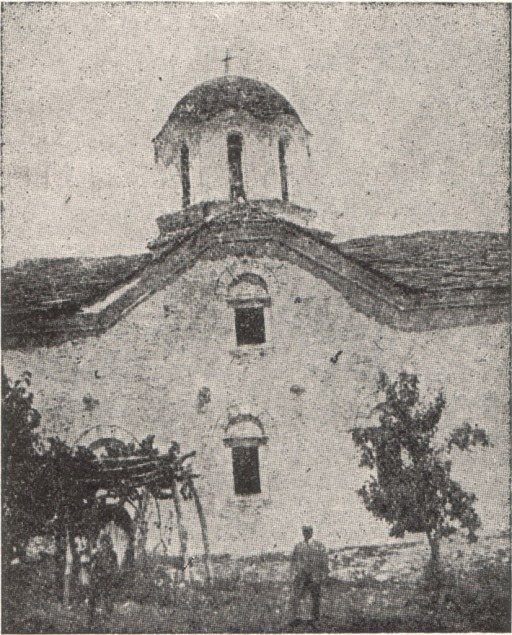
Fig. 152. Monastery of Bukovo (Monastir).
(«Μακεδονικὸν Ἡμερολόγιον» 1912, p. 69)
marily upon Greece. Among the towns and villages which belonged to the metropolitan of Pelagonía, Préspa and Ohrid, and which possessed flourishing Greek communities were the following: Megárovo, Kruševo, Nizópolis, Tírnovo, Gópesi, Melóvista [2], Yankovétsi, Ano Bélitsa, Káto Bélitsa, Prilep, Veles, Skopje, Resna and Ohrid.
Monastir also shed its influence upon the Vlach-speaking and Slav-
1. See Vacalopoulos, Δυτικομακεδόνες ἀπόδημοι, p. 31, where the relevant bibliog-aphy may be found. On Monastir at the end of the 19th century see Andr. I. Arvanitis, Μοναστήριον, «Μακεδονικὸν Ἡμερολόγιον» 1908, pp. 157-173.
2. See regarding Melovista I. Christides, Μηλόβιστα, «Μακεδονικὸν Ἡμερολόγιον» 1910, pp. 65-67. See petition from certain inhabitants in Turkish Documents, 3 (1809-1817) 5-6.
481
speaking villages of Lahtsi, Bukovo (see fig. 152), Brusnik, and Dihovo, where the inhabitants showed a decidedly Greek consciousness [1]. On the other hand, in the districts of Resna, Strunga and Dibra (see map 12) it was the Slav language which prevailed, or as Cosmas Thesprotos calls it, "σθλαβονική", in other words Bulgarian [2]. Nevertheless, there was, culturally speaking, a measure of Greek influence persisting in these parts through the medium of the Church. Proof of this is the fact that in the register of St. George of Strunga the various historical records are written in Greek between 1792 and 1860. There are, however, a number of entries in the local Slav dialect, though written in Greek characters [3].
Ohrid still retained a measure of importance during this period. It had 3 churches as against 6 mosques, in spite of the fact that the inhabitants (1.300 families in all) were equally divided between the Moslem and Christian faiths [4]. On the other hand, in the 60 villages around Ohrid Albanians were in the majority [5].
3. The history of the virtually connected villages of Megárovo and Tírnovo cannot be dissociated from that of Monastir. In Megárovo (seefig. 153) about the middle of the 18th century, there existed only 3 to 6 Slav-speaking families. After the abortive revolt of 1770 Vlach-speaking refugees from the village of Linotópi and Albanian-speaking refugees from Kolonia and Bithkoúki moved to Megárovo to escape the rapacity of the Moslem Albanian bands that were ravaging those areas. These new immigrants were engaged primarily in tailoring and commerce, and secondarily in fine metalwork and stock-rearing [6].
Even before 1800 many fine houses and 13 water-mills had been erected at Megárovo. Around the same time Oiconomos Papademetrios from Constantinople purchased from Seïd Rustem that part of the mountain, together with its forests, which lay above the township;
1. Tel. Katsouyannis, Περὶ τῶν Βλάχων τῶν ἑλληνικῶν χωρῶν. Β'. Ἐκ τοῦ βίου καὶ τῆς ἱστορίας τών Κουτσοβλάχων ἑπὶ τουρκοκρατίας, Thessalonica 1966, p. 59. On Resna see K. Andreades, Ρέσνα, «Μακεδονικὸν Ἡμερολόγιον» 1910, pp. 217-220.
2. See details in Κ. Thesprotos - Ath. Psalidas, Γεωγραϕία Ἀλβανίας καὶ Ἠπείρου, Yannina 1964, pp. 26-29.
3. Snegarov, History of the Archbishopric of Ohrid, p. 8. See also p. 7. On Strunga see F. C. H. L. Pouqueville, Voyage de la Grèce, Paris 1826, vol. 3, p. 58.
4. Pouqueville, ibid., pp. 55 ff.
5. Mano, Resumé géographique, p. 545.
6. Kizas, Μεγάροβον, «Μακεδονικὸν Ἡμερολόγιον» 1910, pp. 239-240.
482
and he may have acquired some of the lowlands too. Oiconomos Papademetrios also carried out the duties of school-master. Another man mentioned as a schoolmaster is a certain Morokis, teaching around 1800 [1].
At the beginning of the 19th century Megárovo was the property of Seïd Rustem Bey, kaymakam of Monastir [2]. The tradition about the property he held was still extant at the beginning of the present century [3].
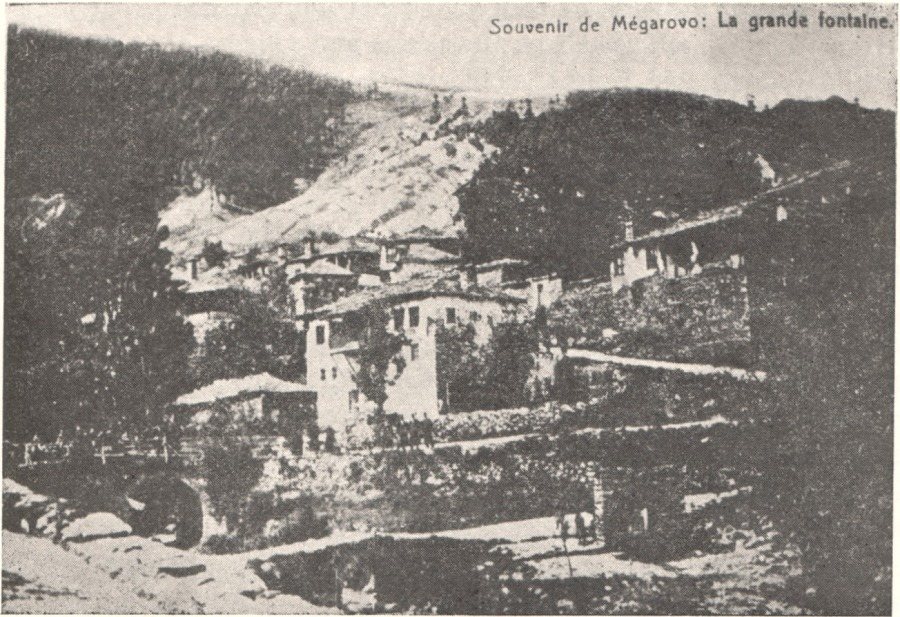
Fig. 153. Megárovo.
In a petition drawn up by certain inhabitants of Megárovo and dated 24 December 1807, there is a noticeable predominance of Greek and Vlach names. Amongst these, for example, figure Papa-Thodoros, Papa-Thanasis, Kostas Giorgis, Michalis Naoum, Gerasimos Stergios [4].
Some time later, Moslem Albanians took advantage of Ali Pasha's death and the emergence of fresh disorders to renew their incursions against the Vlach-speaking villages. They wiped out Grámmousta, which had been built on the southern foothills of the Grammos Range, and had
1. Kizas, Μεγάροβον, pp. 240-242.
2. Turkish Documents, 2 (1803-1808) 112. On Rustem Bey see ibid., vol. 4 (1818-1827) 34-37.
3. Kizas, ibid., p. 239.
4. Turkish Documents, 2, p. 112.
483
been an important township with around 3.000 families, mostly engaged in stock-rearing. About ten families of head-shepherds (τσελιγκάδες) came to settle in Megárovo along with some families from Bithkouki. In 1845 the Doga family invited 10-15 families of Albanian-Vlach shepherds from Grammos to look after its flocks. This may be said to be the ultimate stage in the settlement of Megárovo.
According to tradition, Tírnovo was founded at the beginning of the 18th century, though its church was not built till 1815. The inhabitants were mainly refugees from townships and villages of north-western Greek Macedonia and Epirus, similar to those who settled in Megárovo. Towards the end of the 19th century Tírnovo developed into a flourishing Greek township with a number of imposing educational establishments [1].
Out of a desire, no doubt, to play down the Greek character of Tírnovo's population, the editor of the second volume of "Turkish Documents" (published by the Institute of National History of Skopje) has made the following comment on a petition drawn up by the villagers sometime between 1805 and 1808. "From the names contained in this document it would appear that the population of the village of Tírnovo was composed of Vlachs and Macedonians" [2]. Obviously the writer phrases it thus to avoid making any mention of Greeks. Yet no such nationalities as Vlach and Macedonian existed. The Vlachs were completely Greek in sentiment, a fact admitted by earlier Yugoslav scholars, including Popović, a Vlach himself (see p. 387). And under the term 'Macedonians' are to be counted not only Greeks and Slavs but also Albano-Vlachs; and most, if not all, of these were Greek in feeling. It would be useful if the editor were to publish photo-copies of the document in question, so that a more thorough examination of the names of the Tírnovo villagers might be made — even though their transliteration into Turkish was not always accurate.
Α similar Turkish list of villagers of Melóvista (dated 27 April 1824) states that the signatories have appointed as their deruhdeci (representative with full powers) in matters of tax-payment our well-known Seïd Rustem Bey [3]. This office, usually held by a rich Moslem, was abol-
1. See A.K.G., Τύρνοβον - Μέγαροβον, «Μακεδονικὸν Ἡμερολόγιον» 1908, pp. 224-227. The paper of Tel. Angelou, Μεγάροβον καὶ Τύρνοβον, Thessalonica 1954, does not put anything essential to what is already known.
2. Turkish Documents, 2 (1803-1808) 80.
3. Turkish Documents, 4 (1818-1827) 85.
484
ished on 24 August 1830 by order of the Rumeli valisi, on account of the arbitrary and corrupt use made of the post by those who held it [1].
4. Amongst other villages manifesting strong Greek feelings should be mentioned Kruševo, settled sometime after the Greek insurrection of 1770. Lying north of Monastir at a height of 1300 metres, it remained a somewhat obscure settlement, some distance removed from the other villages in that part. Kruševo formed part of the property of Kerim Bey of Ohrid and contained at the beginning a very small number of families [2]. The first settlers to arrive found only one Slav-speaking family, the other inhabitarıts being Vlach shepherds who spent only the summer there, descending to lower ground in winter.
Between 1769 and 1779, and later still, settlers came to this insignificant hamlet from various townships and villages in Southern Macedonia, Epirus and Albania (Nikolítsa, Moschopolis, Samarína, Linotópi, etc), seeking a haven from the destructive raids of the Moslem Albanians [3]. There were also a few Greek-speaking families amongst them, and in the course of time these were absorbed by the Vlach- and Albanian-speakers [4].
The first people to flee to Kruševo— a few families from Nikolítsa— were peaceful artisans, chiefly goldsmiths and tailors. These appear to have exercised some influence on the character of the original settlers, who were of a much rougher type because of their mountain origin [5]. The next families to arrive came from Linotópi and Grámmousta. The latter were stock-rearing nomads and chose to live at the upper end of Kruševo so as to be assured of easy access to grazing for their flocks [6]. The influx of settlers continued into the time of Ali Pasha of Yannina [7].
On the western side of Kruševo was formed a new settlement composed of Albanian-speaking families from Bithkúki and Opára, who had come under the leadership of the priests Eustathius and Yannakis. These people were mostly engaged in trade. In course of time contact
1. Turkish Documents, 5 (1827-1839) 50-51.
2. See Popović, On the Cincari, p. 291. N. Ballas, Ἱστορία τοῦ Κρουσόβου, Thessalonica 1962, p. 17.
3. Popović, ibid., pp. 291-292. Ballas, ibid., p. 18.
4. Ballas, ibid., p. 20.
5. Ballas, ibid., pp. 18-19.
6. Ballas, ibid., p. 19.
7. Ibid., p. 18.
485
with the other villagers caused them to lose their Albanian tongue [1].
Α petition drawn up by the inhabitants of Kruševo on 22 January 1807 confirms the existence of the immigrations outlined above. Among the signatories may be recognised names that originate in well-known Vlach-speaking areas of Greek Macedonia and of Albania, as well as some from Greek-speaking areas. Such names include Papa Dimitris, Papa Stergios, Hadjioglu Thomas, Hadji Simos, Papa Oikonomos Demos, Sahinis, Petros Simou. Others are those of artisans from Vlach-speaking areas like Linotópi, Vertiánik, Kleisoúra, Néveska (Nymphaeon), Samarína, Opára, Débar, etc. [2]. The editor ought to publish a copy of this documents as well. Popović gives us quite an extensive list of names of Kruševo families, grouped according to their place of origin [3].
In the north-west portion of Kruševo had settled the so-called Miaki from Lazarópolis in Northern Macedonia. These were itinerant builders who during the summer went off to work at Sérres, Dráma, and thereabouts, returning home for the winter. From 1880 onwards they began to emigrate to Bulgaria, where builders could find plenty of work after the end of the Russo-Turkish war (1877-1878), when the founding of the Bulgarian state brought a rapid increase in building activity. From then onwards the Miaki fell under the influence of Bulgarian schooling and propaganda, and were gradually absorbed [4].
The rugged and infertile nature of the area, combined with the isolated position of Kruševo itself, bred a spirit of enterprise and adventure amongst the inhabitants. Thus the majority of the menfolk went off the other places both within and without the Ottoman empire in search of better prospects, and the only people left in the village were the women, the small children and the old folk. Workers from Kruševo were to be found at Monastir, Prilep, Kicevo, Skopje, Thessalonica, Ohrid, Korytsá, Yánnina, Sérres, Dráma, Constantinople, etc. Outside the Ottoman empire their activities extended as far afield as Serbia, Rumania, Bulgaria, and Egypt. Α smaller number were to be found in Austria, Russia, Italy and America, and a few even reached as far as Abyssinia, India, and Australia [5].
1. Ballas, Ἱστορία τοῦ Κρουσόβου, p. 19. See also p. 27.
2. See Turkish Documents, 2 (1803-1808) 80-82. Herein is mentioned also the name Kole (Nikolaos) Naltsas, whose descendants had settled in Thessalonica at the beginning of this century.
3. Popović, On the Cincari, p. 292, para. 3.
4. Ballas, ibid., p. 19.
5. Ballas, ibid., pp. 32-33.
486
When the town was in its heyday the Greek population of Kruševo amounted to 18.000. However at the time of its destruction, at the beginning of the 20th century, we find the number down to 14.000, as a result of large-scale migrations, to Monastir, Thessalonica, Skopje, Constantinople, and Athens [1].
Kruševo was divided into 12 'districts', forming a semi-circle from north-east to south-east: (1) Struga, (2) Hadjibusa, (3) Salana, (4) Yeni Klise, (5) Arnaout, (6) Kole Naltse, (7) Mezilji, (8) Kouri, (9) Ostriltsa, (10) Koupri, (11) Birina, (12) Monastir [2].
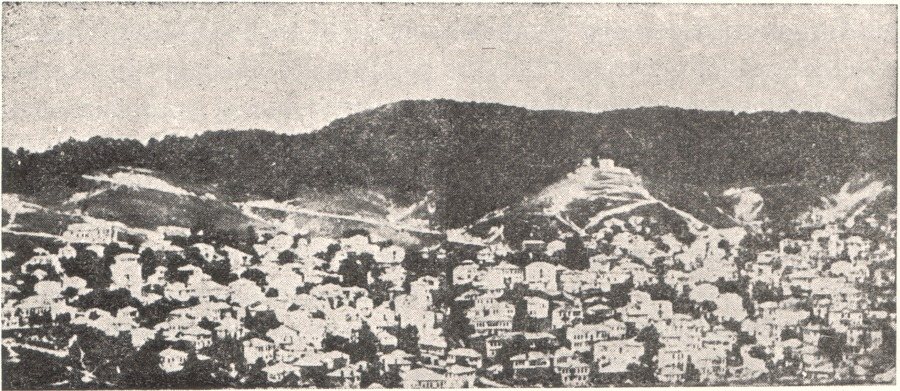
Fig. 154. Kruševo. View of the west side of the town with Kiósk.
(Archives of I.M.X.A.)
The houses in the town were all built of stone except for a small number built of bricks (see fig. 154). Many had two and three storeys, with 4-8 rooms, cellars and spacious court-yards. In winter they tended to be cold to live in [3]. Popović describes them as follows: "Nearly all the houses were spacious, with several floors and many comfortable rooms; their lay-out was very attractive and they had lots of windows. They abide to this day as a striking testimony of the prosperity of old Kruševo. Some of the houses were like small palaces, enhanced with beautiful salons and balconies. Above the massive doors leading to the court-yard or to the upper part of the house there would usually be a monogram — rather like a coat of arms — supported on each side by a pair of birds, lions, or horses; and usually the year the house was built
1. Ballas, Ἱστορία τοῦ Κρουσόβου, p. 20.
2. Ibid., pp. 21-22.
3. See Popović, On the Cincari, p. 294. Ballas, ibid., p. 22.
487
was recorded there, too" [1]. The roads in the town were narrow and without regular plan. In the centre of the town, near the church, a bazaar was held, at least until the beginning of the 20th century — in accordance, no doubt, with an ancient tradition—, twice a week, on Mondays and Thursdays. However, the trade conducted there was somewhat limited in scope, the chief items being agricultural produce, meat and dairy-produce. The women of Kruševo busied themselves with the making of heavy woollen garments, hose, carpets (of 'kilim' type), rugs, blankets, and thick cloaks (ϕλοκάτες). These were exported to Prilep, Kicevo, Skopje, and Monastir [2].
The inhabitants of Kruševo, no less than of the other Greek communities, showed concern for the education of their children. There were no actual school buildings, but the pupils were educated in the homes of the teachers who had themselves received but a limited education. Their sole aim was to teach the children to read and to have them learn by heart a number of religious texts (the Psalter and the Oktoëchos). The teachers were paid a very small sum by the parents, and in addition received an allocation of fuel for their house and schoolroom.
Besides the elementary school which existed in every 'district', there was also a central school in the house of a certain Ingelisis—though this did not differ from the others in its essentials. When, later on, the teaching was undertaken by an unqualified doctor named Christodoulos Papaïoannou from Zagóri in Epirus, some progress was made after his introduction of a method of reciprocal instruction [3]. Popović says that after 1860 there was functioning an intermediate school, at which in the early years, it appears, graduates from the elementary school of Monastir used also to attend [4]. Generally speaking, Greek education was dominant both throughout the schools and in the Church [5].
In accordance with an ancient tradition an ecclesiastical court was held at Kruševo; and after the transfer of the metropolitan seat of Prespa and Ohrid to Kruševo sometime after 1879, the Metropolitan presided over the court. He had three members of the clergy to assist him, chosen from the whole body of the priesthood [6].
1. Popović, On the Cincari, p. 294.
2. Ballas, Ἱστορία τοῦ Κρουσόβου, p. 22.
3. Ibid., pp. 29-30.
4. Popović, ibid., p. 295.
5. Ballas, ibid., pp. 29-32.
6. Ballas, ibid., pp. 22-23. See also G. Vavouskos, Der Beitrag des Griechentums von Pelagonien zur Geschichte des neueren Griechenlands, Thessalonica 1963, p. 13.
488
5. Remnants of Koutsovlachs and other Greeks exist even today at Kruševo, Tírnovo, Megárovo, Nizópoli, Gópesi, Melóvista, Yagovac in the Prespa area, and Ano and Káto Bélitsa in the Ohrid area. There are also a number at Monastir, Skopje and Belgrade; and a very small number at Ohrid, Divri, Veleš, Gevgelija, Resna, Prilep, and elsewhere. Even up till the eve of the Second World War, when minorities were being oppressed in Yugoslavia, there were, as Popović admitted, 3-4.000 Koutsovlachs living in Monastir "together with the Greeks", in Skopje a further 2-4.000, and in Belgrade around 2.500 [1]. These figures are undoubtedly less than the actual ones. The same writer makes the following strange statement (verbatim): "In Monastir these people consider themselves by and large as Greeks, but in other towns in our country they consider themselves Serbs" [2]. By implication it would appear that he, as a native of Kruševo, feels himself a Serb. His analysis of the distribution of Koutsovlachs throughout pre-war Yugoslavia runs as follows: "It is difficult to assess with accuracy how many Koutsovlachs there are in our country in as much as people in the towns are loath to admit that they are Koutsovlachs. In Monastir the majority of them consider themselves as Greeks, but in our other towns as Serbs. According to Erdelianović they number about 9.000 in all; but from the data we have collected there are probably more Koutsovlachs: some 12.000-15.000. These are divided amongst the various settlements as follows: Kruševo about 1.500; Melovista, about 200; Megarovo, about 100; Gopesi, about 50; Monastir (counted together with the Greeks), 3.000-4.000; Skopje, 2.000-3.000; Belgrade, about 2.500; and in other parts, some 3.000 in all. As a rule they do not form separate groups: in Kruševo they form hardly half the population, and in the larger towns like Skopje, Belgrade and Monastir their number is insignificant. This dispersion of the Koutsovlachs is the decisive factor, amongst others almost as important, in the fate of the Koutsovlachs. Their days, as a seperate racial group, are numbered: they will survive for 40-50 years but no more" [3].
In a more general context, Maria Symeon has some inleresting remarks to make about the Serbizing of Greeks: "...The Serbs will not admit the Greeks to the more important public offices. As a result of this the Greek element has begun to adopt a Serbian identity, and as
1. Popović, On the Cincari, pp. 289-290.
2. Ibid., p. 290.
3. Ibid., pp. 289-290.
489
a first step they have changed their names to sound as Serb as possible. For example, Dr. Vladan Gjorgjević, the prime-minister of Serbia under Milan Obrenović, was of Greek descent and had changed his name from Hippocrates Georgiades (as an author he had written works in both Greek and Serb). The celebrated author and comedy-writer, Branislav Nusić was a Greek formerly named Alcibiades Nousias. The list of such Serb-ized names is massive..." [1].
The actual state of affairs in the Southern Balkan lands during the more recent past one can deduce from the remarks of the Serbian ethnologist, Cvijić, who was well acquainted with the facts. We have already quoted his words at the beginning of this book, but it might be useful to be reminded of them once more. "The Byzantine cultural influence was much more perceptible in the towns of the Southern Balkans, where it is well in evidence today. Here the Byzantine-Aromounic (i.e. Vlach) civilization enveloped the population of the villages, too. Among the reasons contributing to this end was the fact that there used to be a more numerous population of Greeks and Vlachs than exists today...".
As regards the national feelings of the Vlachs — described in many parts of his book as being undefined and not Greek — in an attempt to play down the presence of the Greeks Popović feels obliged to write: "Our Greeks are actually Hellenized Koutsovlachs, originating from purely Koutsovlach areas. There were 'Greeks' amongst them, yet these were not from Greece itself, but from the half-barbarous Macedonia, Epirus and Thessaly (for as such they were regarded by the ancient Greeks)". However, these Koutsovlachs — and this holds good for the inhabitants of Macedonia generally — were so orientated towards Greece and the world of its ideas, that sometimes the wealthier people used to adorn their houses with paintings whose subjects were inspired by Greek models (see figs. 155, 156, 157). "And yet it cannot be denied that the Koutsovlachs felt themselves Greeks, and that in actuality they brought the Greek tongue, the Greek way of life, and the Greek spirit to the West, and in consequence to us" [2].
Characteristic of the outlook shared by the inhabitants of Yugoslav Macedonia is a quotation of the philoslav Weigand, cited by Popović: "Our people of Macedonia, up to just a few years ago, inclined to have
1. M. Symeon, Αἱ ἑλληνικαὶ παροικίαι εἰς τὴν Γιουγκοαλαβίαν, «Μακεδονικὴ Ζωή» January 1967, part 8, p. 23.
2. Popović, On the Cincari, p. 302. For more about the Greek ethnic feelings of the Koutsovlachs of Prilep see p. 214, paras. 62 ff.
490
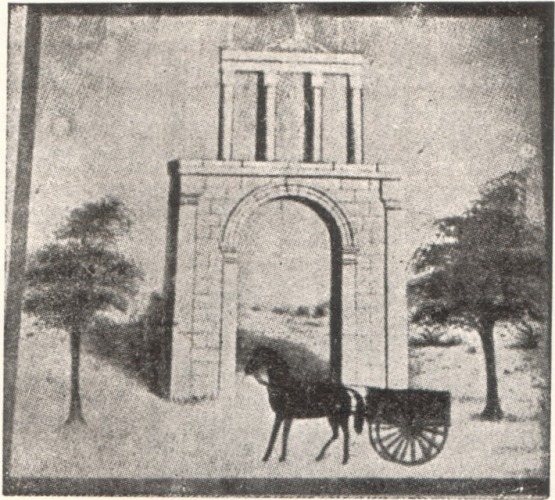
Fig. 155. Wall-painting in the mansion of D. Keratzis: "Hadrian's Gate at Athens".
(Nich. Moutsopoulos, Τὰ ἀρχοντικά τῆς Σιάτιστας, «Ἐπιστ. Ἐπετ. Πολυτεχν. Σχολῆς Παν. Θεσσαλονίκης» (1961-1964) plate 49, fig. 2)
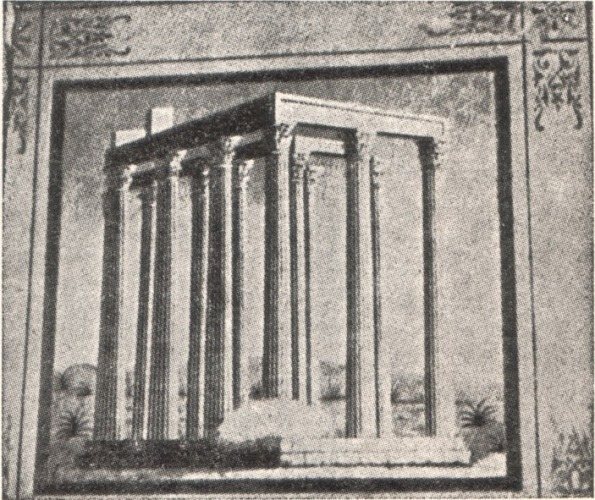
Fig. 156. Wall-painting in the mansion of D. Keratzis: "Columns of the Temple of Olympian Zeus at Athens".
(Moutsopoulos, ibirt., plate 89, fig. 2)
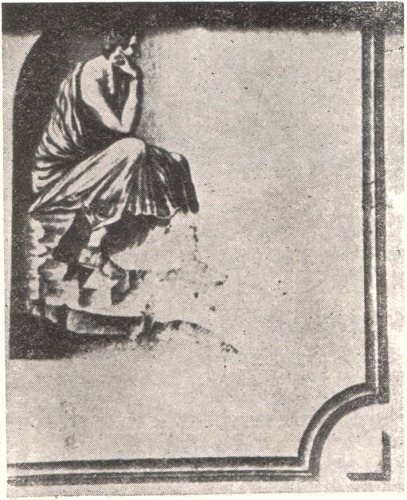
Fig. 157. "Aristotle". Oil-painting in the mansion of N. Tsírlis at Néveska (Nymphaeon).
(«Μακεδονικὴ Ζωή», vol. 22, March 1968, p. 30)
491
Greek feelings; and this was particuıarly so in the case of the Koutsovlachs. When on one occasion at Prilep a priest conducted the service in Slav, the Koutsovlachs of Prilep were up in arms and immediately replaced him with another priest from a monastery, who knew Greek; for they were unwüling to allow the church to be 'tainted with Slav
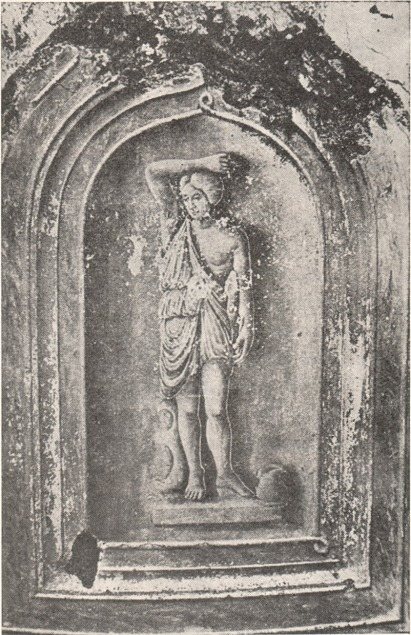
Fig. 158. Amazon. Oil-painting in the mansion of N. Tsirlis at Neveska (Nymphaeon).
(J. Touratsoglou, Γραπτὴ Ἁμαζὼν ἐκ Νυμϕαίου. «Ἀρχαιολογικὰ ἀνάλεκτα ἐξ Ἀθηνῶν, 1 (1968) 307).
rites' " [1]. This is just one incident that bears direct and positive testimony as to the feelings of the inhabitants towards Greece and the Greeks.
The fate of the Greek emigrés settled in Yugoslav territory is the common fate of all the minority groups that found themselves surround-
1. Popović, On the Cincari, p. 214, para. 62.
492
ed by political conditions alien to their nationality. Sooner or later they were all to become identified with their environment both politically and ethnically. Economic conditions, intermarriage, and pressures of centralisation characteristic of these newly-born states all played their part in speeding up this process [1].
One indigenous group Slav in language but Greek in feeling were the Strumnitsiotes. These people dwelt along the southern margin of a fertile plain and at the foot of five hills [2] in south-west Bulgaria. Quite
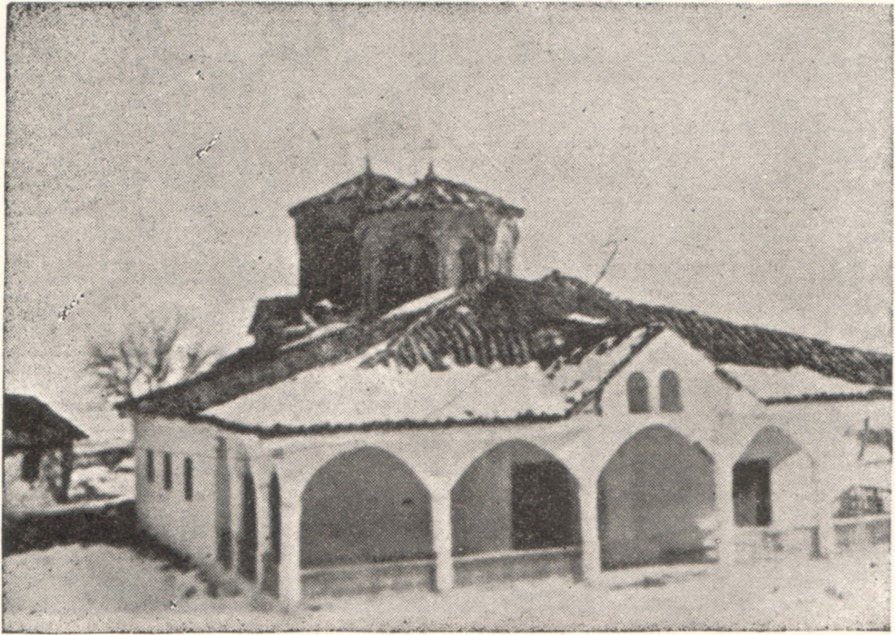
Fig. 159. Monastery of the Merciful Virgin near Strumnica.
(Photo K. Bonis)
sizeable villages near Strumica (see fig. 159) were Nevrokópi, Dólia, and Petrítsi, which produced the famous tobacco [3]. Other villages similarly Slav-speaking but Greek in feeling were Eleoúsa, Gábrovo, Kolésino, Makryovo, and Zúbovo (see map 12) [4]. Were their inhabitants, one wonders, the remains of those Greeks referred to in the 14th century as dwelling in that region "mixed up with Mysians" (i.e. Bulgarians) [5], and who had by this time become entirely Slav-speaking? Greek had
1. Concerning the Serbizing of the emigrés see the opinions and examples of Popović, On the Cincari, pp. 279-285. Popović has made an interesting attempt to catalogue the Koutsovlach families in the Southern Yugoslav regions, which he has added to the second part of his book.
2. Bonis, Ἡ Στρώμνιτσα, p. 5.
3. Anonymous, Descrizione della Macedonia, «Fundgruben des Orients» 5 (Vienna 1816)442.
4. Bonis, ibid., pp. 24-25.
5. See page 20 of this book.
493
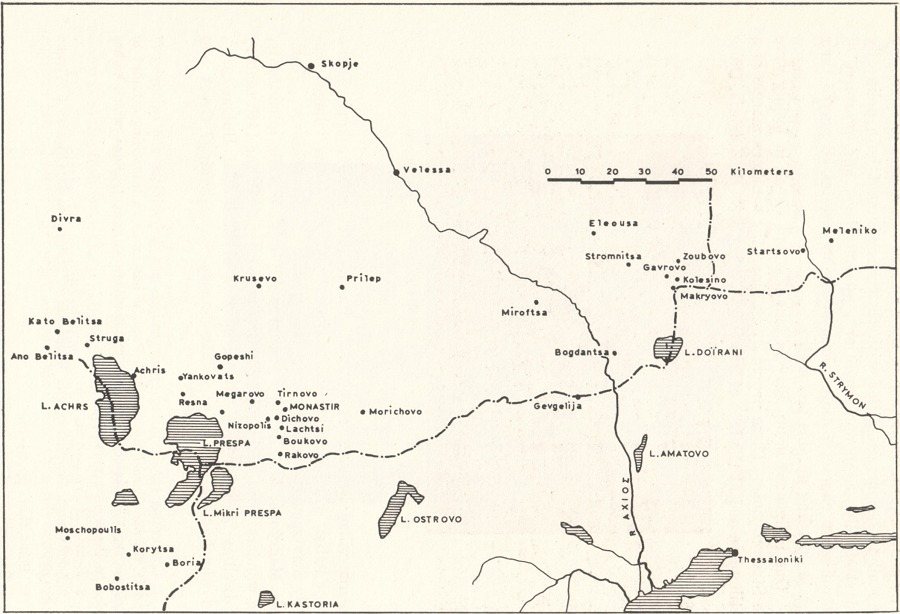
Map 12. Greek communities surviving in Bulgarian Macedonia up to the First World War, and in Yugoslav Macedonia up to the Second World War.
494
been preserved only at Melnik. Perched upon a towering cliff, Melnik (eee fig. 160) lay on the main route to Sérres, with which it maintained trade connections. Its inhabitants were thus kept in close touch with their fellow-Greeks of Sérres. Melnik was important for the manufac-
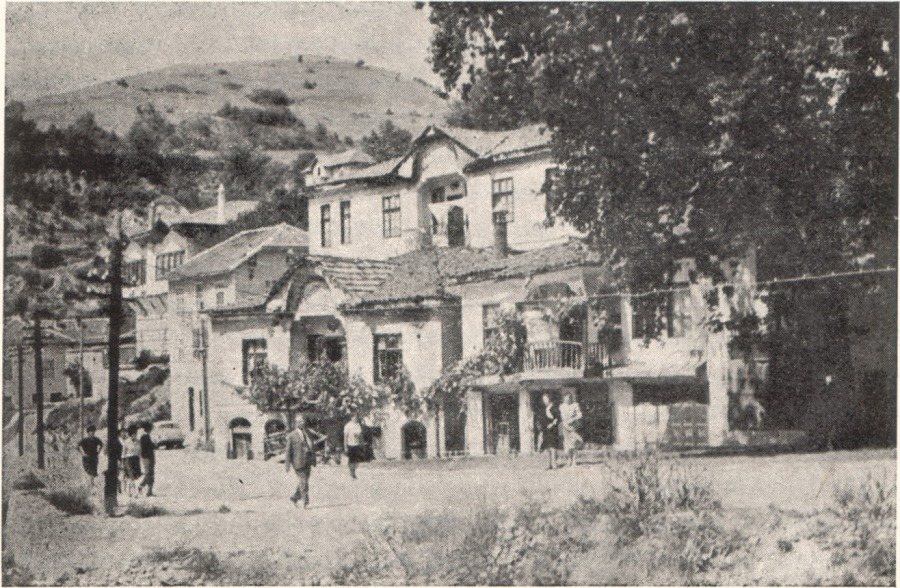
Fig. 160. Melnik.
ture of arms and of gold lamé. Α trade fair was held there every year and did much to boost the city's commercial activities [1].
1. G. A. Mano, Résumé géographique, p. 523.